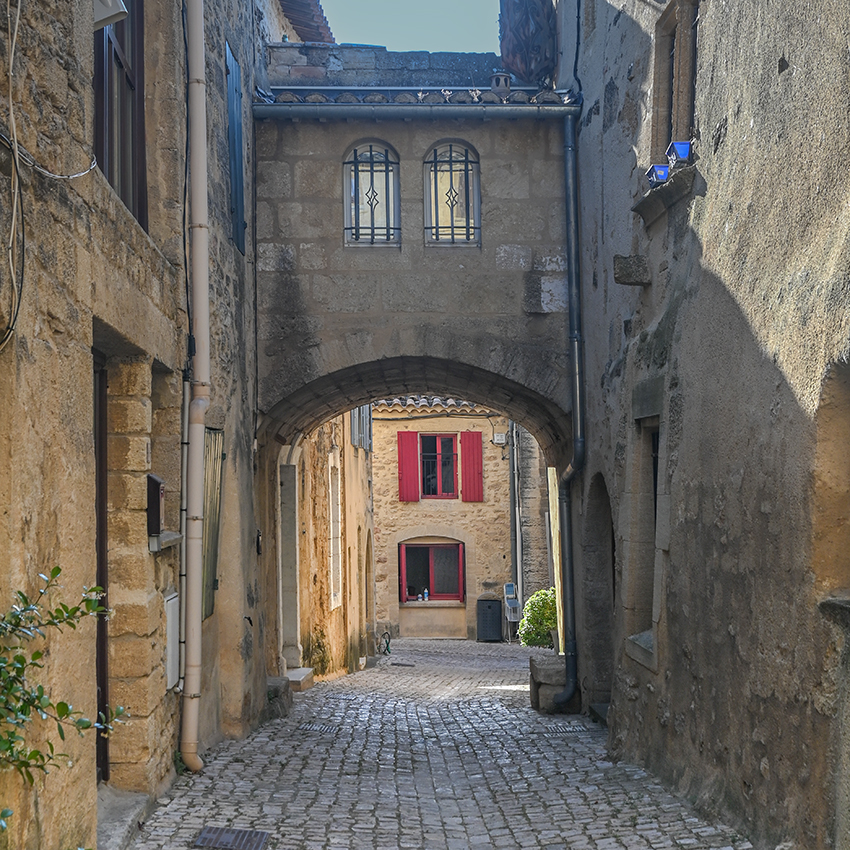
Occitanie, or Occitania in english, was formed from the former Languedoc-Roussillon and Midi-Pyrénées Regions in 2016. The Region is a territory that in the 12th and 13th Centuries was ruled by the Counts of Toulouse. The name refers to the use of the OIccitan launguage and its dialects. It is the second largest region in France.
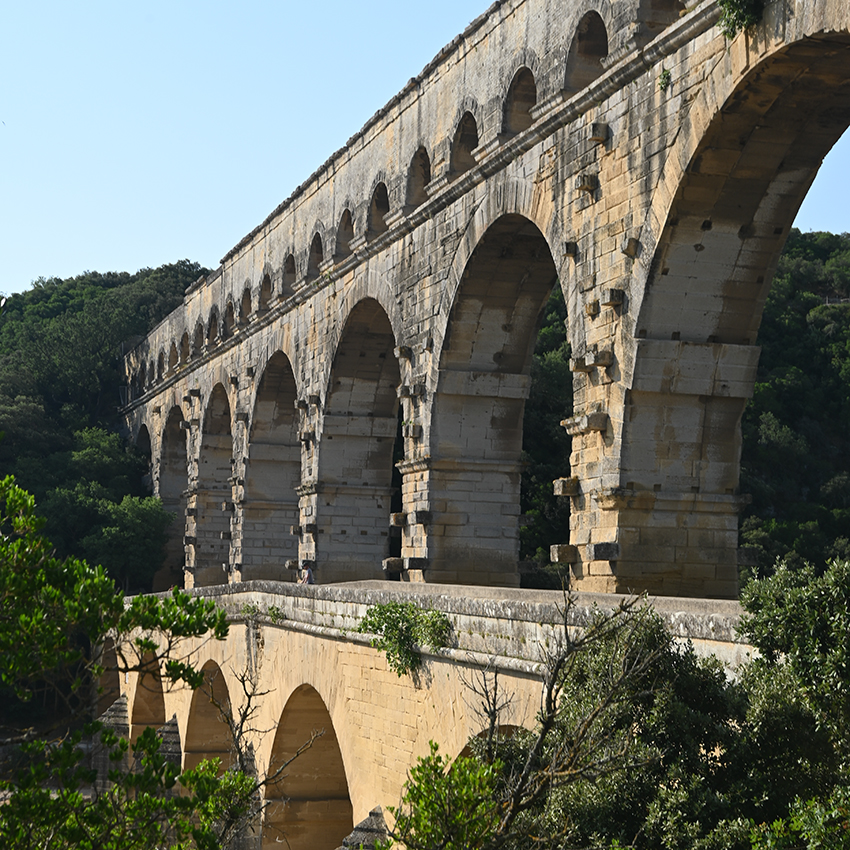
The Roman aqueduct bridge, Pont du Gard, 1AD moved water over 50 km to the Roman colony of Nemausus, now the city of (Nîmes). The majority of the acquaduct system, about 35 of the 50 km is actually build undergrouns. But it rises to great height to cross the Gardon River near the town of Vers-Pont-du-Gard in southern France.
Its the tallest of all Roman aqueduct bridges, as well as one of the best preserved. Added to the UNESCO's list of World Heritage sites in 1985.
Take the D981, there are signs for the car lot. Park the car and walk back in time as you approach the Pont. While there is no charge to see the bridge, there is a hefy parking fee. Once in the parking lot, unless you want to stop and see the museum (ticket required) just walk on down the path to the river and the bridge. The river area is a beautiful park and open for swimming.
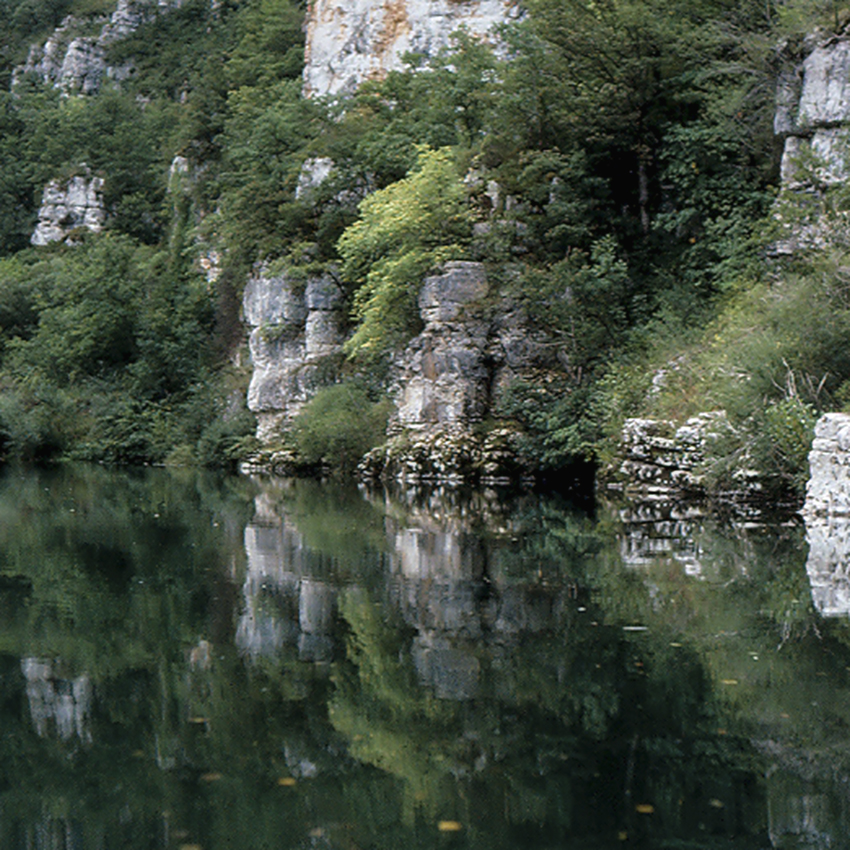
Now here is a way to spend a day. Drive the Tarn Gorges. Take the D907 for the 80 km drive between Florac and Millau. If you can, staying at the scenic Chateau de Caze won't be cheap, but you are staying in a 500 year old chateau right along the river.
We rented canoes and spend the day going along the river. There are numerous companies all along the way do you do not have to worry about only finding one.
The cathedral (14th C) was demolished in 1560 when the bishops and masitrates embraced Protestantism, expelling the monks and demolilshed the catherdral..
During World War II, the famous painting, the Mona Lisa, was briefly hidden in a secret vault in one of the wine cellars of this town.
The fortifications are now boulevards. The old bridge (Pont Vieux) dates from the early 14th C and took 30 years to build. The bridge used to have fortified towers. It is noted as most medieval bridges were of a humpback design, and this one is flat.
We will be touring the Musée Ingres, which sits on the site of the previiuos castle of the Counts of Toulouse, and the building was once of the residence of the bishops of Montauban. It holds the largest collection of the work of Jean Ingres.
Montauban was one of the first bastides in the region. Bastides are fortified new towns built in the Lanquedoc and Aquitaine Regions during medieval times as part of the colonization of the wilderness. At the time, the southwest of France was partly owned by France and partly by the kings of England. England? At the time, the kings of England spoke French, were Angevins, one of the four great French dynasties. Although they moved families and residence from Angers in the Loire Valley to England they retained large areas of land in France, mainly in the Aquitaine. There were between 500 -700 bastides built in France.
Creation of the bastides was another means of landowners collecting revenue from taxes. When families moved to the bastides, they were no longer a vassal of the local lord, but a freeman, who paid taxes on their trade. Landlords could be a group of local lords or the abbot of the local monastery.
The main square of a bastide town is typically a square, with arcades along the sides. This was the market place. Trade paid the taxes, so this was the true center of activity.
A charter outlined life in a bastide. The sovereign held feudal rights. The local lord the duties of enforcer of local justice and the liaison between the sovereign and the residents.. New inhabitants were required to build a house within a set time, typically one year. Residents received a house lot, a kitchen garden lot (casale) and lot of land for cultivating crops (arpent).
We have found that Carcassone is so impressive, especially when you see it in the distance as you approach the town.
Of course, this is the "Region of the Cathars" and for a period of time was the scene of horrific battles. The Cathar Sect held the view that good resided only in the spiritual world, and therefore, the material world of man was intrinsically evil. The Cathars rejected the sacraments of Catholicism and raised a clergy that included men and women — known as the Perfects. The Cathars centered in the Languedoc and lived under the protection of the Counts of Toulouse.
Well rejecting the sacraments of the Catholic Church had a price. The movement was condemned by the Pope. After the Papal Legate to the Region was assassinated in 1208, Simon de Montfort, an Anglo-French warrior, lead a crusade that would eliminate the Cathars Entire villages were sacked and destroyed. The battles ended in 1229 with the fall of the Count of Toulouse to the French Crown.
We visited Montepllier and Uzès on a couple trips, with the most recent being our 2002 visit where we rented a house not far from Narbonne and used that as our base to tour the area.
Located on the River Tarn, Albi has an impressive cathedral, that has been added to the UNESCO list of World Heritage Sights. When we visited Albi a very strong storm moved across the area. There was a down pour of rain, the river turned brown and rose in height, and at one point we has to stay in the Cathedral, with many others, as the storm passed. What a place to stay.
The Sainte Cécile Cathedral is considered a masterpiece in terms of Gothic style. It dates from the 13th to 15th Centuries. The interior is all painted in a rich blue and gold, so although massive in size, there is a real warmth to the appearance of the interiior of the cathedral.
The church retains it rood screen, integrate stone work that divides the church into the private area and that of the common masses. It has over 200 statutes.
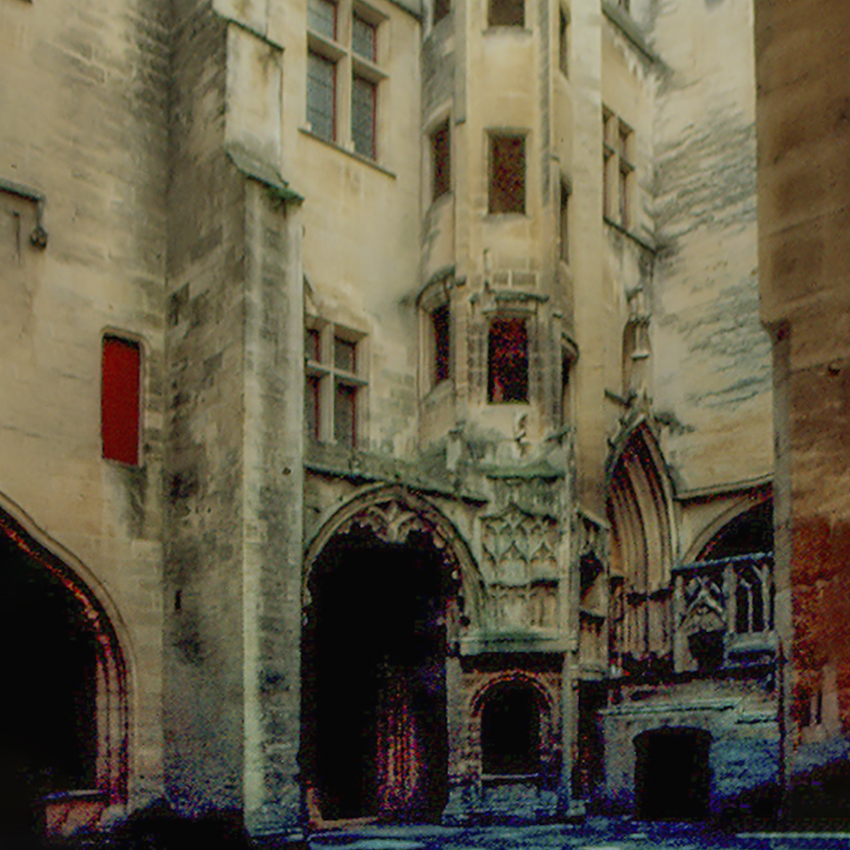
The monastery was builkt in the 11th century. The Franciscan monks established a psychiatric asylum in the monastery in 1605. In 1889, Vincent van Gogh voluntarily admitted h imself to the asylum after a breakdown that results in the self-mutilation of his left ear. Saint-Paul-de-Mausole had wealthy clients, and was not full when Vincent arrived. That allowed him to to use a second-floor bedroom and a ground-floor rome as a painting studio.
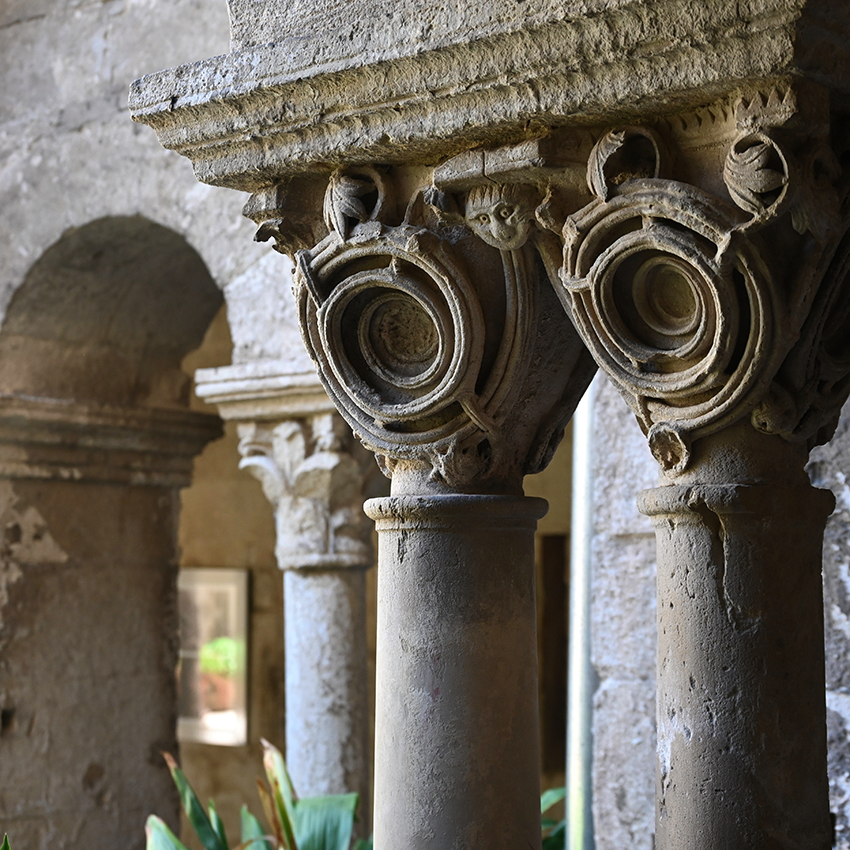
The name of the Monastery comes from the Mausoleum of Les Antiques, built by the Romans, and which are located across the road. The Romanesque cloister opens onto four barrel vaulted galleries.